A one-person shop that runs like a company
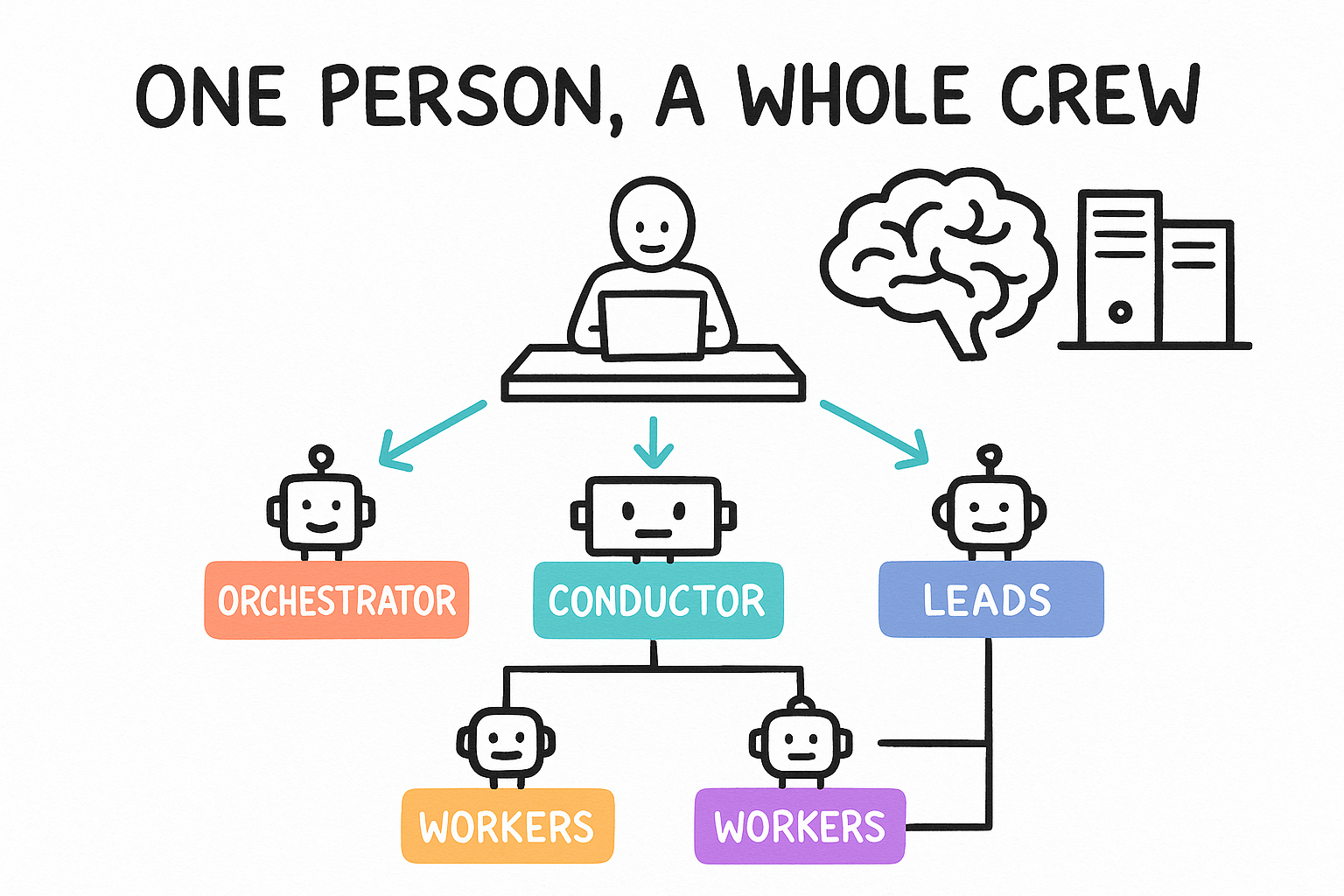
The setup turns a single operator into a whole crew. Instead of doing every task by hand, the operator describes an outcome and a layered system of AI roles takes it from idea to finished work: one role plans, one role conducts, domain leads own their craft, and disposable workers do the volume. It all runs across several always-on machines and remembers what it learns. The result is leverage: more gets done per request, with less sitting and correcting.
- You describe the outcome. The crew figures out the how.
- Roles are layered: plan, conduct, lead, execute.
- It spans multiple machines and keeps a shared memory.
Think in one place, build somewhere else
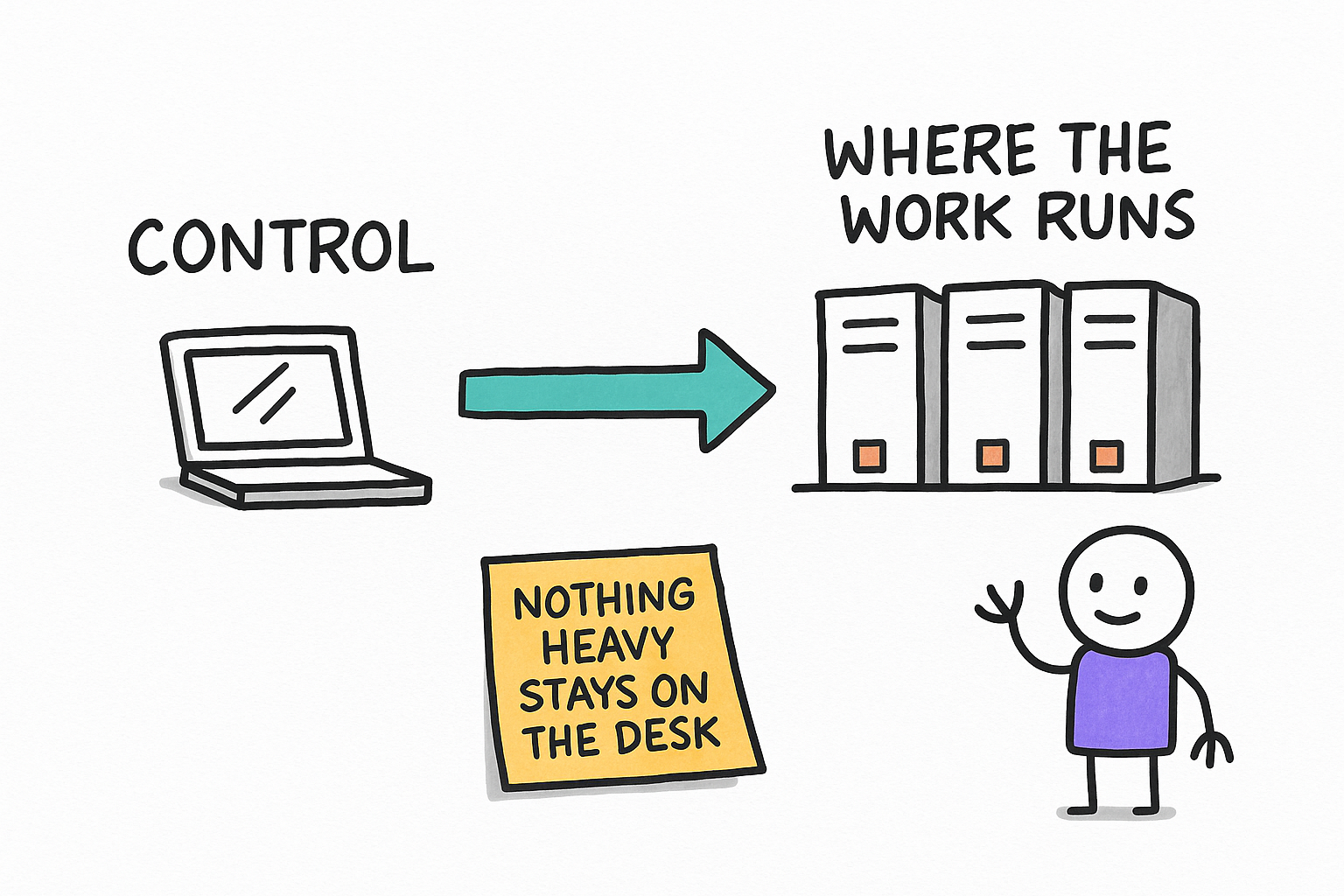
The machine in front of the operator is a thin control surface, nothing more. You open it, say what you want, and the heavy work, the builds, the long jobs, the automation, gets dispatched to always-on machines elsewhere. The control surface returns a quick confirmation and can be closed at any time without stopping the job. Nothing heavy ever ties down the desk, so you can fire off many requests a day without fear of slowdowns.
- The local surface only orchestrates and reports.
- Real work runs on remote, always-on machines.
- Close the laptop anytime. The job keeps going.
An orchestra, not a one-man band
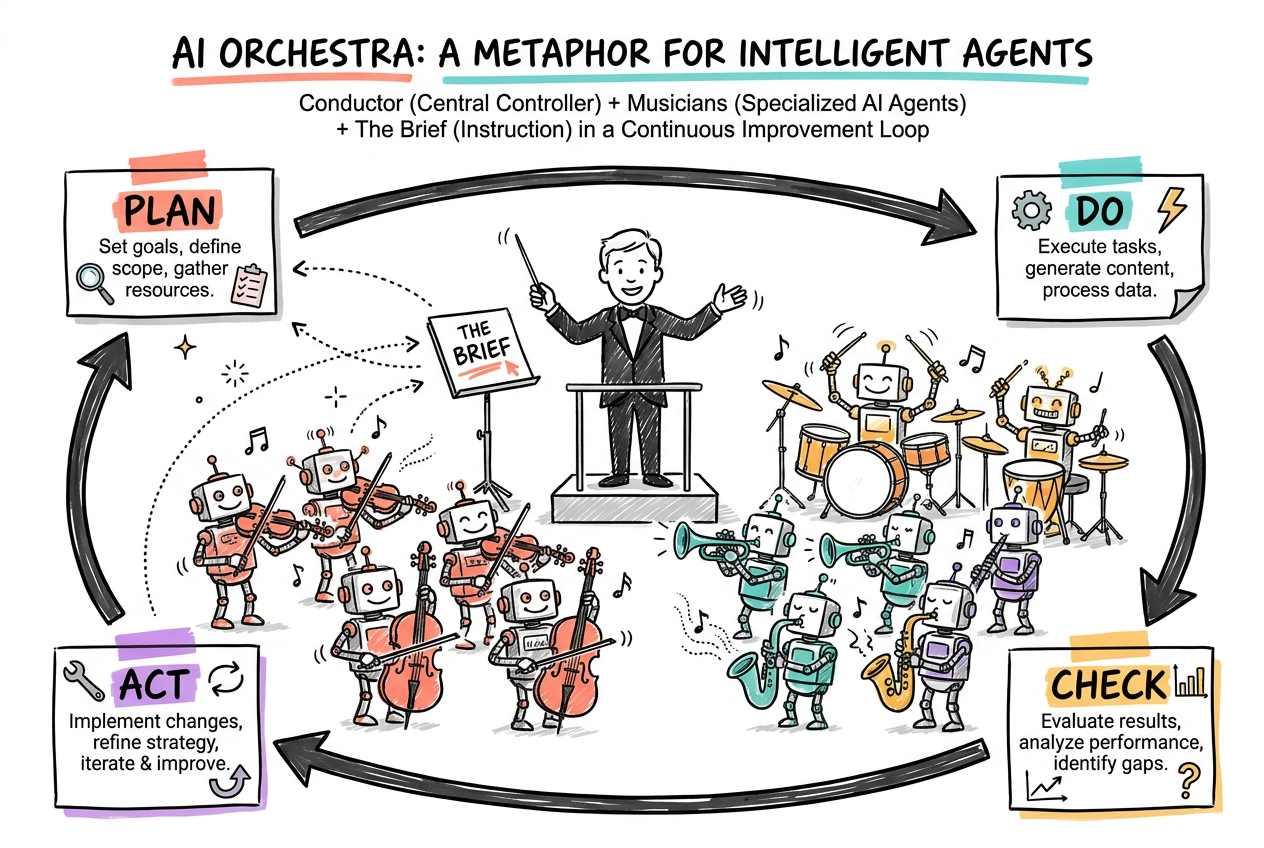
The operating model is an orchestra. A composer writes the brief, the high-level score of what to make and why, but not the detailed parts. A conductor takes that score and sequences the performance: who plays when, what depends on what, what runs in parallel. Each section leader writes their own part for their instrument. A separate check role verifies the result before anything ships, and a final role captures what was learned. Plan, do, check, act, every cycle.
- Composer: writes the brief. Not the details.
- Conductor: sequences the work and dependencies.
- An independent check role can veto a bad result.
Specialists, not one do-everything assistant
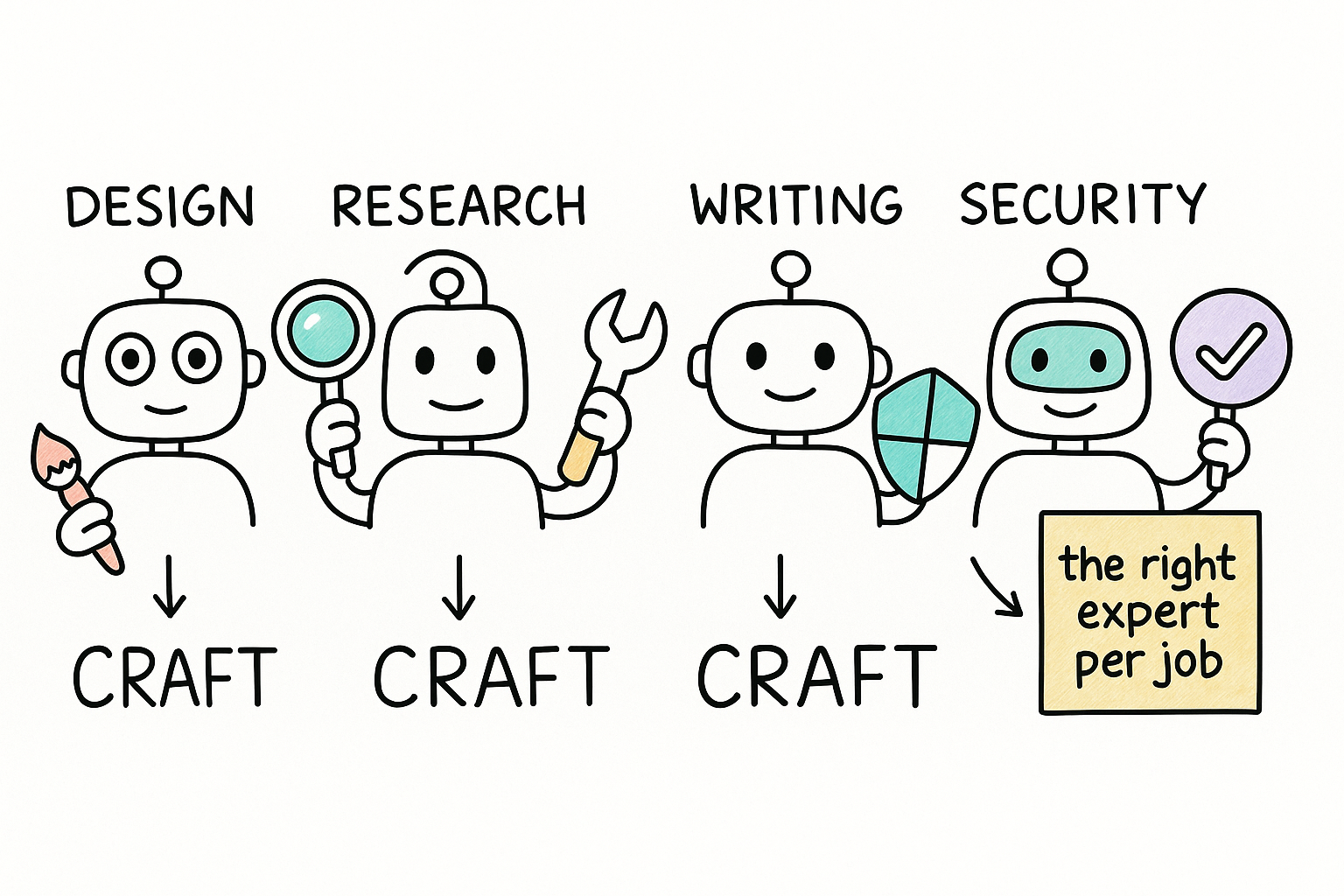
Rather than one generalist, the system keeps a roster of specialists, each an expert in a single craft: design, research, writing, building, infrastructure, quality, and more. Each has its own identity and its own memory, so it stays in character and remembers its own past work. When a task arrives, it routes to the specialist whose craft fits best. The right expert shows up for the job instead of a jack-of-all-trades guessing its way through.
- Each specialist owns one craft and stays in character.
- Each carries its own memory of its past work.
- Tasks route to the best-fit expert automatically.
Dispatch: big jobs fan out in parallel
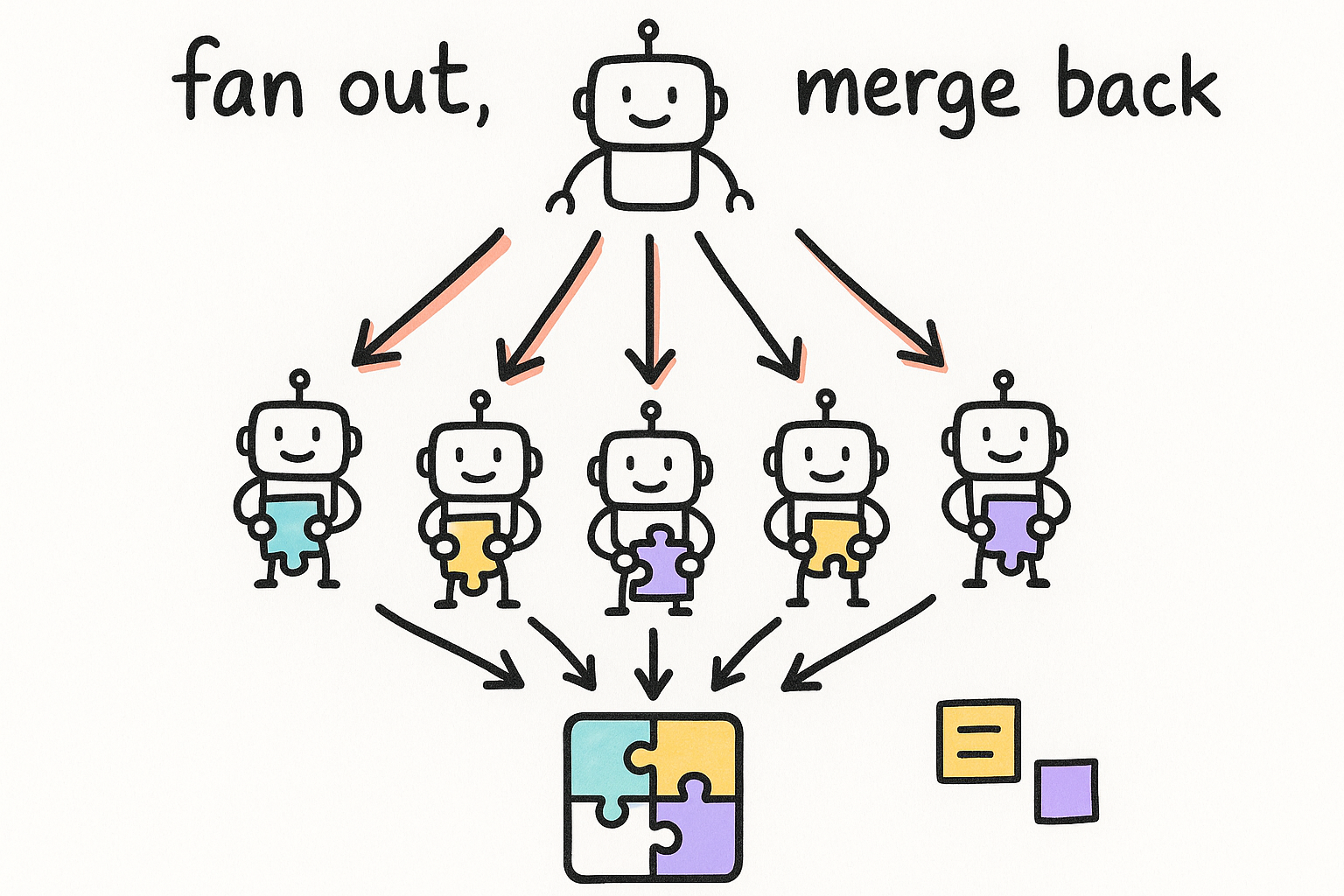
When a job is large or splits into independent parts, it does not get ground through in one long sitting. It gets dispatched. The system spins up many workers at once, each taking one slice of the problem, working in parallel, and reporting back just the result, not the noise. Those results merge into one clean answer. The operator stays the conductor: set the goal, let the parts play, review the whole. Wall-clock time collapses from the sum of the work to the length of the slowest single piece.
- Independent parts run at the same time, not in sequence.
- Each worker returns the conclusion, not the raw dump.
- Results synthesize back into one answer.
Playbooks: never relearn the same process
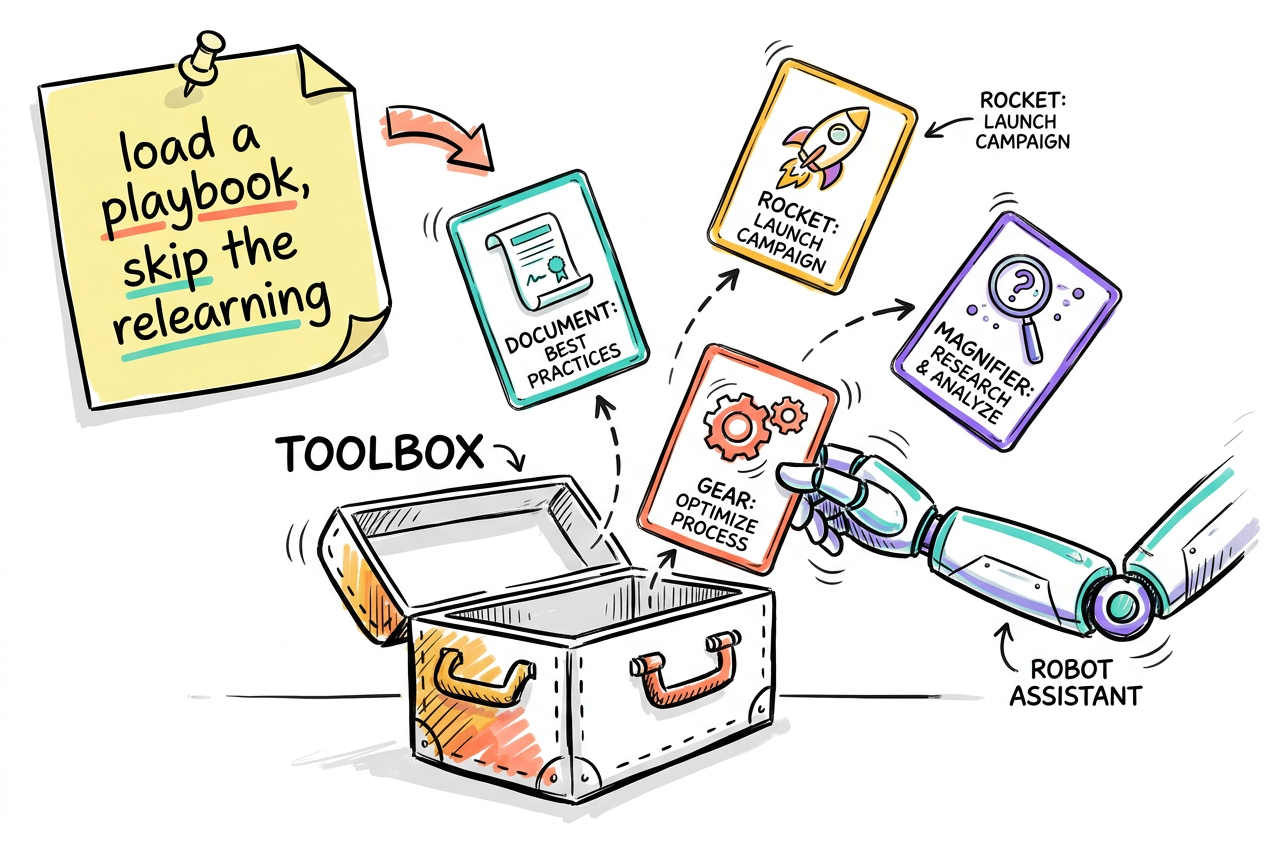
Repeated work becomes a playbook. Instead of re-explaining how to do a review, a build, or a research sweep every time, the system stores the process once and loads it on demand. The right playbook fires automatically when its kind of task comes up. The rule of thumb: do something by hand three times and it becomes a template; templates become automated workflows. Knowledge compounds instead of evaporating.
- A process is captured once, reused forever.
- The matching playbook loads itself when relevant.
- Three times by hand becomes a reusable template.
Memory in layers, each with a purpose
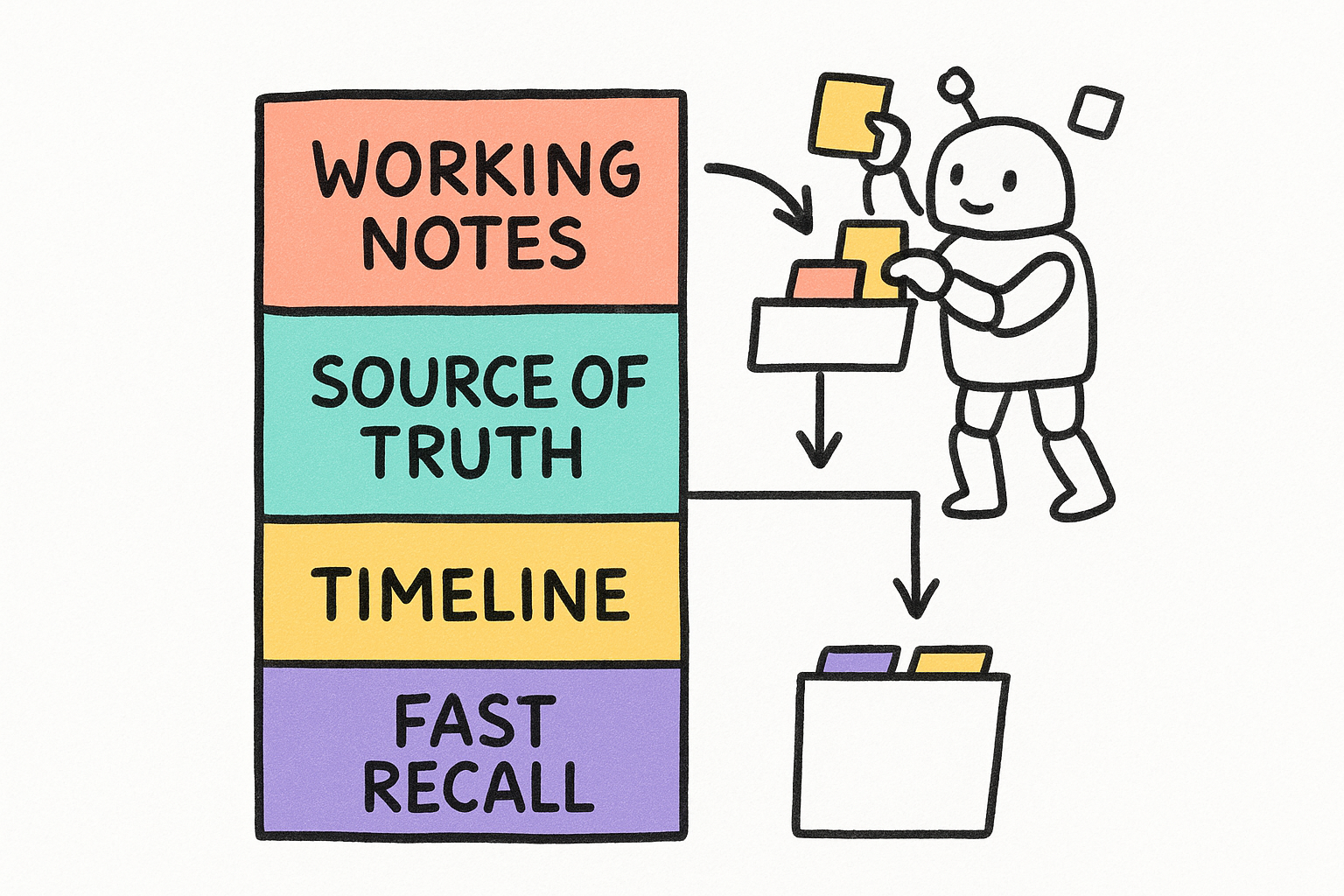
Memory is not one bucket; it is a stack of layers that each do a distinct job. A working layer holds what is happening in the current effort, the live notes and handoffs. A source-of-truth layer holds durable facts and how things relate to each other, the stable backbone. A timeline layer remembers what was true and when, so old context does not get mistaken for current state. A fast-recall layer makes any of it searchable in an instant. Pulling from the right layer is what keeps the whole crew consistent.
- Working layer: live notes for the current effort.
- Source of truth: durable facts and how they connect.
- Timeline: what was true, and when.
- Fast recall: search any of it instantly.
Closing the loop: the system improves itself
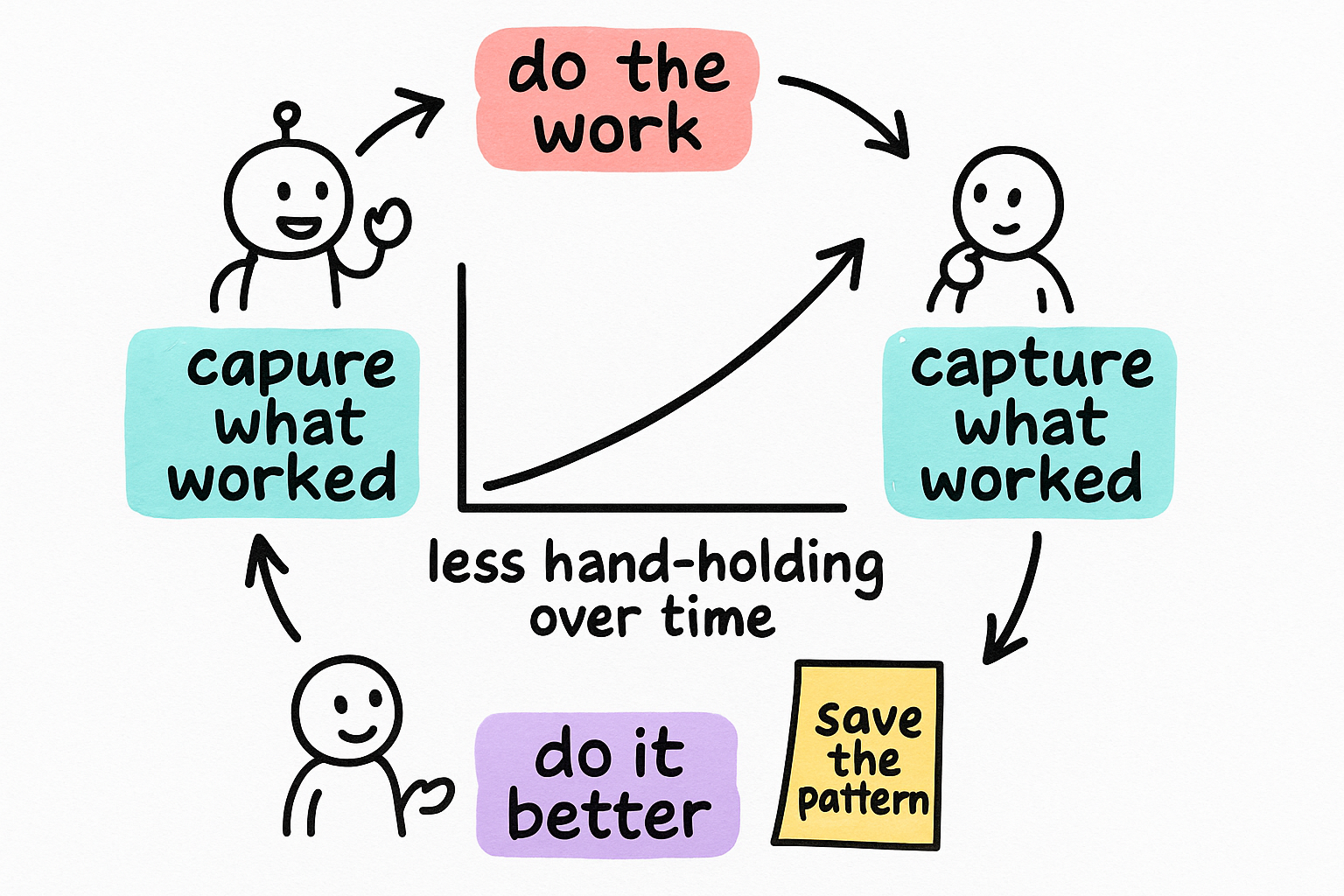
The last piece is a learning loop. Every cycle, the system does the work, captures what actually worked, banks that as a reusable pattern, and uses it to do the next round better. Validators are embedded in the task itself, so the work checks itself instead of waiting for a human. Over time the amount of sitting-and-correcting trends toward zero. The operation is not static; it compounds, getting sharper with every run.
- Capture what worked, bank it as a pattern.
- Validators live inside the task: it checks itself.
- Required hand-holding trends toward zero.